
Redefinir la velocidad en la contratación tech
¿Y si contratar rápido no significara apurarse, sino decidir mejor? En tech, la velocidad ya no es solo una ventaja: es la base de la innovación.


¿Qué pasa cuando la forma de contratar no acompaña la velocidad con la que se construye tecnología?
En un entorno donde los equipos lanzan productos y actualizaciones todos los días, los tiempos tradicionales de contratación ya no tienen sentido. Cada semana dedicada a revisar perfiles o coordinar entrevistas retrasa la entrega, incrementa los costos y deja que el mejor talento se vaya con competidores más ágiles.
Las empresas que contratan con agilidad no solo ahorran tiempo: ganan capacidad de respuesta. Llegan antes al talento, reducen fricción interna y sostienen el ritmo del producto sin comprometer calidad.
Por eso la innovación no ocurre únicamente en el producto, sino también en la forma en que se construyen los equipos que lo hacen posible. Hoy, la velocidad en la contratación tech ya no es un lujo. Es una estrategia para seguir avanzando en contextos que cambian todo el tiempo.
La pregunta es por qué importa tanto la velocidad, y qué cambia realmente cuando se la piensa bien.
Por qué la velocidad importa en la contratación tech
La clave está en entender la velocidad más allá de cubrir roles rápido. Se trata de construir un sistema capaz de responder al cambio. La tecnología evoluciona cada semana, las prioridades se mueven y las oportunidades aparecen, o desaparecen, de un día para otro. Los equipos que pueden contratar con agilidad no solo son más eficientes: son más resilientes, capaces de reacomodarse, experimentar y entregar sin perder impulso.
La velocidad habilita:
- Ciclos de aprendizaje más cortos: sumar talento acelera la iteración, el feedback y la ejecución de ideas.
- Mayor velocidad de producto: incorporar a la persona correcta en el momento correcto mantiene los proyectos alineados con los objetivos del negocio.
- Estabilidad cultural: equipos que no se sobrecargan mientras esperan incorporaciones sostienen foco, motivación y compromiso.
- Flexibilidad estratégica: empresas que pueden escalar rápido también pueden reaccionar rápido cuando cambian las tecnologías o las prioridades.
La velocidad sostiene a la innovación y hace que la contratación no solo acompañe al negocio, sino que lo mantenga avanzando.
Todo esto suena bien en la teoría. Pero ¿cómo se logra esa velocidad? ¿Qué tiene que cambiar dentro de una organización para que contratar rápido no signifique contratar mal?
Qué hace posible la velocidad en la contratación tech
La velocidad no surge de eliminar etapas, sino de diseñar un proceso en el que cada paso aporte valor. Contratar rápido y con confianza depende de cuatro habilitadores que funcionan de manera conjunta: visibilidad, automatización, estructura y alineación.
- Visibilidad y preparación
No se puede avanzar rápido si se empieza desde cero cada vez. Las empresas que construyen y mantienen un pool de talento validado pueden activar una contratación de inmediato, sin iniciar una nueva búsqueda desde cero. La preparación es lo que genera velocidad. - Automatización inteligente
Las herramientas de IA permiten filtrar ruido, analizar portfolios y detectar patrones de calidad que pueden pasar desapercibidos en una revisión manual. Pero la automatización por sí sola no alcanza: el valor está en usar los datos para amplificar el criterio humano, no para reemplazarlo. El resultado son decisiones más rápidas, basadas en mejor evidencia. - Validación estructurada y asincrónica
Las entrevistas tradicionales suelen ser repetitivas y subjetivas. Reemplazarlas por evaluaciones estructuradas y asincrónicas — desafíos técnicos, screenings por voz o evaluaciones contextuales — permite escalar la validación sin frenar el proceso. - Alineación entre equipos
La velocidad aparece cuando todos definen el “fit” de la misma manera. Cuando recruiters, hiring managers y líderes técnicos comparten criterios de evaluación, no hay idas y vueltas ni reprocesos. Hay claridad y fluidez.
En definitiva, la velocidad no es moverse más rápido. Es eliminar fricción. Cuando claridad e información trabajan juntas, la contratación se convierte en un sistema continuo, no en una carrera contra el tiempo.
La evolución del Tech Hiring
Una industria que evolucionó con cada década, y un proceso de contratación que siempre intentó alcanzarla.
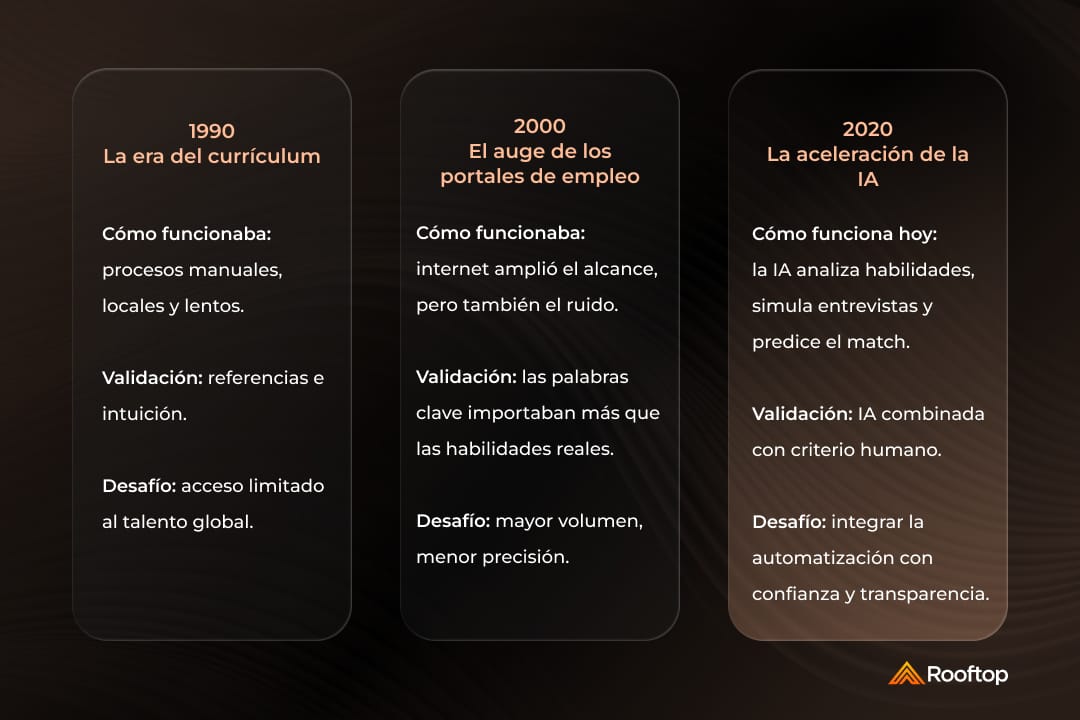
Cada etapa trajo avances: mayor alcance, mejores herramientas, más datos. Pero esta última, la era de la IA, lo cambia todo.
Por primera vez, la tecnología no solo acompaña la contratación: la comprende. La IA transforma datos dispersos en señales claras, ayudándonos a detectar patrones que antes eran invisibles: cómo piensan las personas, cómo resuelven problemas y cómo se adaptan.
Aun así, el objetivo no es la velocidad por la velocidad misma. Se trata de construir sistemas que avanzan rápido porque fluyen, no porque se apuran. Sistemas sin fricción, donde los datos y el criterio humano trabajan juntos.
Ese es el verdadero cambio de esta década: no reemplazar personas con IA, sino usar la IA para eliminar ruido, aportar claridad y permitir que los humanos se concentren en lo que realmente importa.
Rooftop y una nueva definición de velocidad
La evolución de la contratación tech a lo largo de las décadas dejó una lección clara: la velocidad siempre fue una necesidad, pero hoy es una responsabilidad. En un mundo donde la tecnología se reinventa cada semana, moverse rápido no alcanza; hay que moverse con propósito.
Repensar la velocidad implica diseñar sistemas que fluyan con el cambio, donde cada decisión esté respaldada por evidencia, claridad y colaboración. Implica reconocer que detrás de cada contratación hay datos, contexto y personas que merecen tiempo bien invertido, no tiempo desperdiciado.
En Rooftop creemos que la verdadera velocidad no surge de quitar pasos, sino de integrar inteligencia, validación y confianza en un solo sistema. Por eso nuestro modelo combina lo mejor de la IA — para analizar, aprender y anticipar — con lo mejor de los expertos tech humanos — para entender, contextualizar y decidir con criterio.
Porque contratar rápido no es improvisar: es adaptarse de forma inteligente y decidir con confianza.

Cuando la contratación fluye, la velocidad aparece.