
Por qué los procesos tradicionales de contratación fallan en tech (y cómo la IA puede corregirlos)
La tecnología evoluciona semana a semana; la contratación sigue en el pasado.


El mundo tech avanza a una velocidad que la mayoría de los procesos de contratación no logra acompañar. Aun así, muchas empresas siguen evaluando talento con lógicas diseñadas para otra época: filtrado manual de CVs, entrevistas repetitivas y decisiones basadas en impresiones parciales.
El problema: los procesos tradicionales de contratación no están diseñados para la velocidad ni la complejidad del ecosistema tech actual.
El resultado: decisiones basadas en percepción más que en evidencia, evaluaciones sesgadas y oportunidades de talento que se pierden antes de ser vistas.
La buena noticia: la IA está cambiando ese escenario, redefiniendo cómo entendemos, evaluamos y seleccionamos talento tech.
La IA no vino a hacer lo mismo más rápido. Vino a cambiar la forma en que entendemos y evaluamos el talento tech.
Un sistema diseñado para otro ritmo
Si miramos de cerca, la contratación tech tradicional no falla en un punto aislado. Falla como sistema. Cada etapa que alguna vez funcionó en un mercado más lento hoy introduce fricción, ruido y puntos ciegos.
Las descripciones de rol quedan obsoletas incluso antes de entrar en juego: describen herramientas en lugar de problemas, títulos en lugar de impacto. El filtrado prioriza coincidencias de keywords y familiaridad con buzzwords, no capacidad real ni contexto. Las entrevistas miden desempeño bajo presión o repetición de ejercicios ensayados, pero rara vez revelan cómo una persona colabora, piensa o resuelve problemas reales dentro de un equipo.
Y cuando llega el momento de decidir, el proceso vuelve a apoyarse en la intuición: quién “parece” un buen fit, en lugar de criterios compartidos y evidencia estructurada.
El resultado no es falta de información, sino lo contrario: un exceso de señales débiles y una escasez de insights confiables. Demasiadas impresiones, poca claridad y decisiones tomadas sin verdadera confianza.
El problema no es la falta de esfuerzo ni de criterio humano. Es el diseño del sistema. En contextos de alta complejidad y cambio constante, la intuición deja de ser suficiente. No porque falle, sino porque no puede procesar al mismo tiempo volumen, contexto y consistencia.
Antes de hablar de cómo la IA puede corregir este escenario, es necesario entender qué es lo que realmente está roto. Porque cuando el sistema no acompaña la realidad, incluso las mejores personas toman decisiones con información incompleta.
Por qué la intuición ya no alcanza
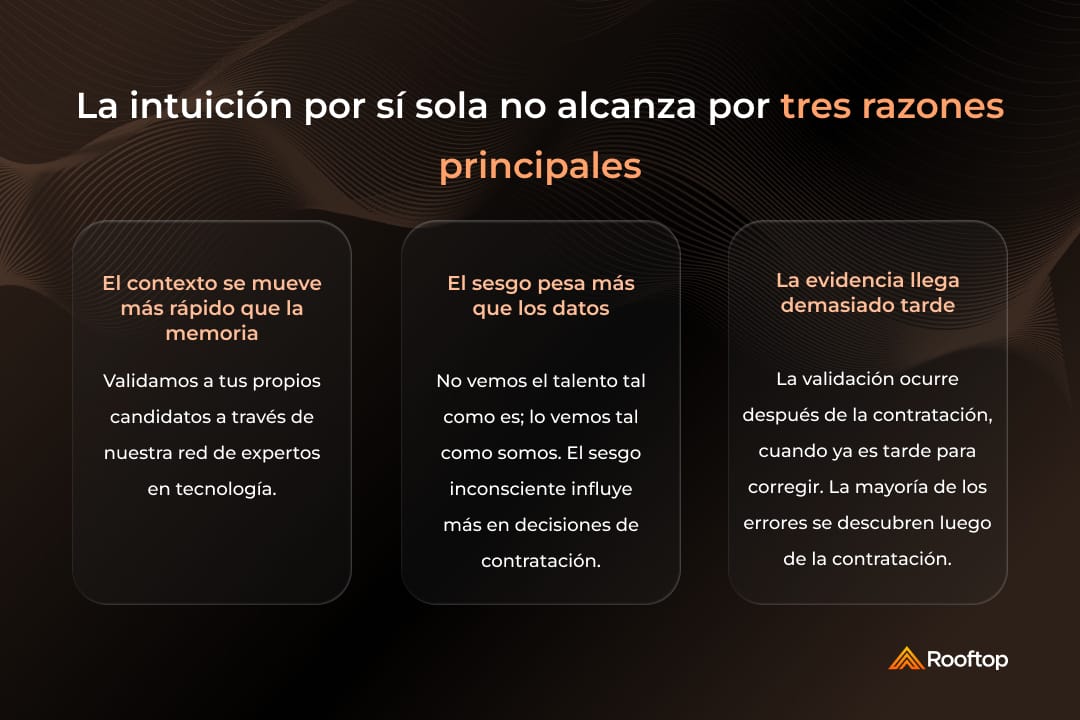
Durante años, la contratación tech se apoyó en la intuición. En la idea de que recruiters y managers con experiencia podían “sentir” quién iba a rendir bien. Ese enfoque funcionaba cuando los roles eran más estables, los stacks cambiaban lentamente y las señales de talento eran más fáciles de interpretar.
Hoy, esa intuición se ve desbordada por la complejidad.
Los equipos de desarrollo actuales trabajan con cientos de herramientas, frameworks y flujos que evolucionan de forma constante. El instinto de una persona no puede seguir ese ritmo. Incluso el mejor entrevistador técnico solo logra evaluar una parte de lo que realmente importa.
El criterio humano es valioso, pero también es inconsistente.
La fatiga, los sesgos y la información incompleta influyen en las decisiones todos los días. Dos entrevistadores pueden conversar con la misma persona y llegar a conclusiones opuestas. No porque alguno esté equivocado, sino porque la intuición no es evidencia.
Aun así, muchos procesos de contratación tech siguen apoyándose en percepciones subjetivas. En promedio, una búsqueda puede extenderse más de 40 días y terminar en decisiones que no están respaldadas por datos claros.
Un artículo de Leadership IQ señala que el 46% de las nuevas contrataciones falla dentro de los primeros 18 meses, con un impacto directo en productividad y costos.
No por falta de talento, sino porque la evaluación sigue dependiendo más de la intuición que de la evidencia real.
Cómo la IA está corrigiendo lo que la contratación tradicional rompió
La IA no viene solo a automatizar la contratación. Viene a reconstruirla desde adentro.
Donde la intuición se apoya en percepciones, la IA introduce estructura, evidencia y consistencia. Por eso, los equipos de hiring ya no se preguntan “quién parece un buen fit”, sino “qué evidencia respalda esta decisión”.
Ese cambio de mentalidad es la verdadera transformación.
1. De procesos lentos a sistemas escalables
Más velocidad, sin perder calidad
En los procesos tradicionales, una parte desproporcionada del tiempo de recruiters se consume en tareas manuales y operativas.
Según el LinkedIn Global Talent Trends Report (2023), entre el 35% - 40% del tiempo de un recruiter se destina a tareas administrativas como el filtrado de CVs o la coordinación de entrevistas.
Al mismo tiempo, SmartRecruiters (2025) indica que el time-to-hire promedio en roles tech es de 48 días, un 26% más largo que el promedio global.
La IA permite romper ese cuello de botella. Copilotos de IA pueden analizar miles de perfiles, portfolios y repositorios de código en minutos, destacando los matches más relevantes según stack, experiencia y resultados reales.
Esto permite avanzar más rápido sin sacrificar calidad y libera a los equipos humanos para enfocarse donde su criterio realmente aporta valor: cultura, liderazgo y comunicación.
2. De sesgo a equilibrio
Más equidad, mejores decisiones
El sesgo inconsciente sigue siendo uno de los mayores desafíos en la contratación.Según TestGorilla (2023), el 41% de los profesionales tech afirma haber experimentado algún tipo de sesgo — consciente o inconsciente — durante procesos de selección.
A su vez, Harvard Business Review señala que factores como el tono de voz, la afinidad cultural o el estilo de comunicación suelen influir en cómo se percibe la competencia técnica, incluso cuando no están directamente relacionados con el desempeño.
La IA ayuda a reducir esa distorsión al anonimizar datos, estandarizar evaluaciones y detectar patrones de sesgo en el feedback. No reemplaza el criterio humano: lo calibra.
Al reducir la subjetividad y asegurar que todas las personas sean evaluadas bajo los mismos criterios, las organizaciones toman decisiones más justas y precisas. El resultado son equipos más diversos y decisiones basadas en mérito, no en percepción.
3. De ruido a insight
Datos accionables, menos incertidumbre
La información de un candidato suele estar fragmentada: pruebas técnicas en una plataforma, notas de entrevistas en otra, feedback perdido en mails o planillas.
La IA conecta todas esas señales en un perfil unificado de talento, mostrando no solo qué sabe una persona, sino cómo piensa, cómo resuelve problemas y cómo colabora.
Esto transforma la contratación en un proceso estratégico y basado en evidencia, en lugar de uno reactivo.
Según Qureos (2025), el tiempo promedio para cubrir un rol tech puede alcanzar los 52 días, en gran parte debido a la baja visibilidad y a herramientas de evaluación desconectadas.
Al unificar los datos, la IA no solo acelera el proceso: mejora la calidad de las decisiones y la capacidad de anticipar desempeño futuro.
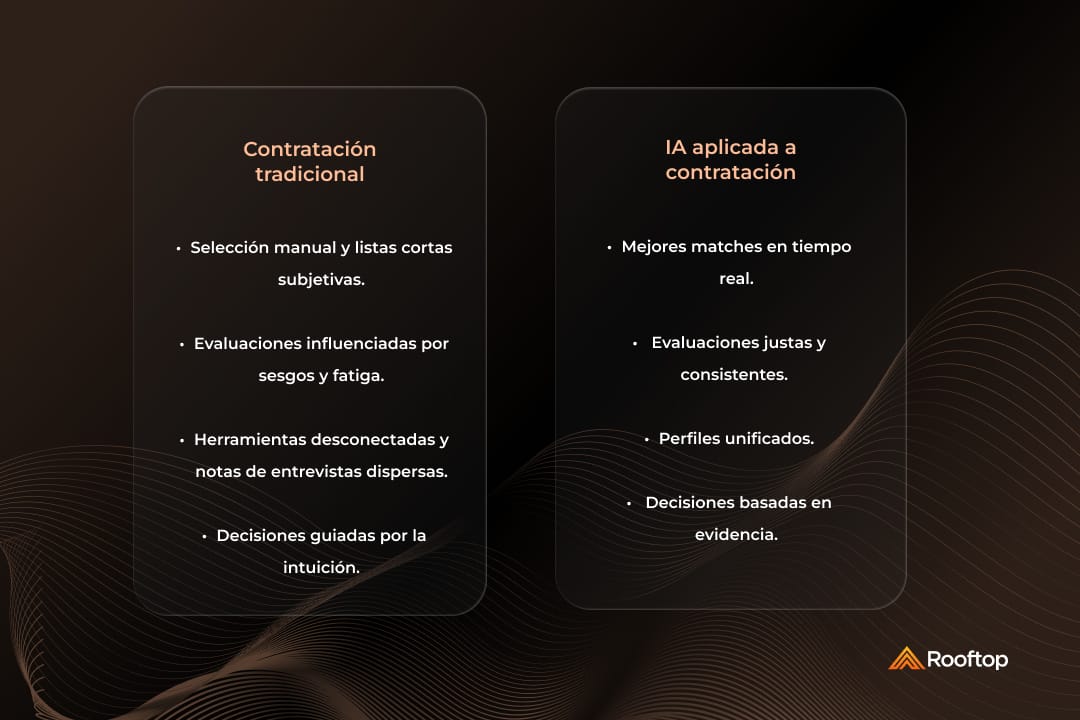
La IA no solo hace que la contratación sea más rápida. La vuelve medible, más justa y escalable.
Aporta claridad donde antes había conjeturas y confianza donde antes había dudas.
IA, datos y criterio humano: los nuevos pilares de la contratación tech
El futuro de la contratación tech no pertenece a quienes se mueven más rápido, sino a quienes deciden con mayor claridad.
La velocidad importa, pero sin información ni contexto solo acelera errores.
Por eso, la verdadera transformación no pasa por automatizar procesos, sino por diseñar mejores decisiones.
Con un enfoque que combina IA + criterio humano, creamos Deep Profile: un modelo de validación que traduce datos en comprensión real del talento. La IA analiza desafíos técnicos, comunicación y consistencia.
Las personas interpretan contexto, matices y potencial.
Juntas, estas capas permiten evaluar con precisión antes de contratar, reducir el riesgo y tomar decisiones basadas en evidencia, no en percepción.
El resultado son procesos más predecibles, justos y escalables, donde cada decisión está respaldada por evidencia validada y cada contratación se convierte en una elección con confianza.
Porque el problema de la contratación tech nunca fue la falta de talento.
Fue la falta de claridad.
Y en Rooftop, esa claridad no es una promesa.
Es el estándar que estamos construyendo.

IA + criterio humano para transformar tu proceso de contratación tech.